
Why Rabby Wallet Might Be the Multi-Chain Tool DeFi Power Users Actually Need
Exploring the World of Culinary Delights: The Journey of Food
30 de dezembro de 2025Unified Gaming Across Devices: How 24 Delivers a Seamless Experience
6 de janeiro de 2026Why Rabby Wallet Might Be the Multi-Chain Tool DeFi Power Users Actually Need
Okay, hear me out—multi-chain is messy. Really messy. One moment you’re bridging assets, the next you’re staring at gas fees on a chain you barely remember using. My instinct said there had to be a better UX for power users who juggle many chains, many tokens, and a lot of on-chain nuance. Rabby carved out a surprisingly pragmatic space here.
Short version: Rabby focuses on predictable transactions, sane UX for multiple networks, and wallet-level tooling that helps you avoid dumb mistakes. That doesn’t mean it’s flawless. But if you trade across L2s and mainnets, it’s worth a look.
I’ll walk through install basics, multi-chain workflows, transaction simulation, and the security posture you’d want to check. I use Rabby a lot for testing—so this is practical, not just theory. (And yes, I’m biased toward tools that reduce mental load.)
Getting started: install and basic setup
If you want to try it, install the extension and set it up like any other browser wallet. The onboarding is straightforward and focused; they don’t overwhelm you with marketing fluff. You can import existing seed phrases or create a fresh wallet. For people who prefer a quick start, I linked the official page here: rabby wallet.
One caveat: pay attention to the network set during import. I’ve seen users accidentally operate on a testnet after import because the extension remembered a previous profile state. So double-check before you approve transactions—simple, but it’s an easy trap.
Multi-chain ergonomics that actually help
Rabby’s core promise is straightforward: reduce surprises when you transact across many chains. It offers a clean network switcher and views that let you compare balances across chains without flipping wallets. That saved me time. A lot of time.
It also groups your accounts and shows the active chain next to each account, which seems small but matters. When you’re managing 6 wallets and 8 networks, small UX choices add up. Seriously.
There are advanced features too: customizable gas presets, chain-specific token sorting, and native support for several popular L2s. On one hand, the features are deep. On the other, some network integrations lag behind newer rollups—so check the chain list if you rely on very fresh deployments.
Why transaction simulation is a game-changer
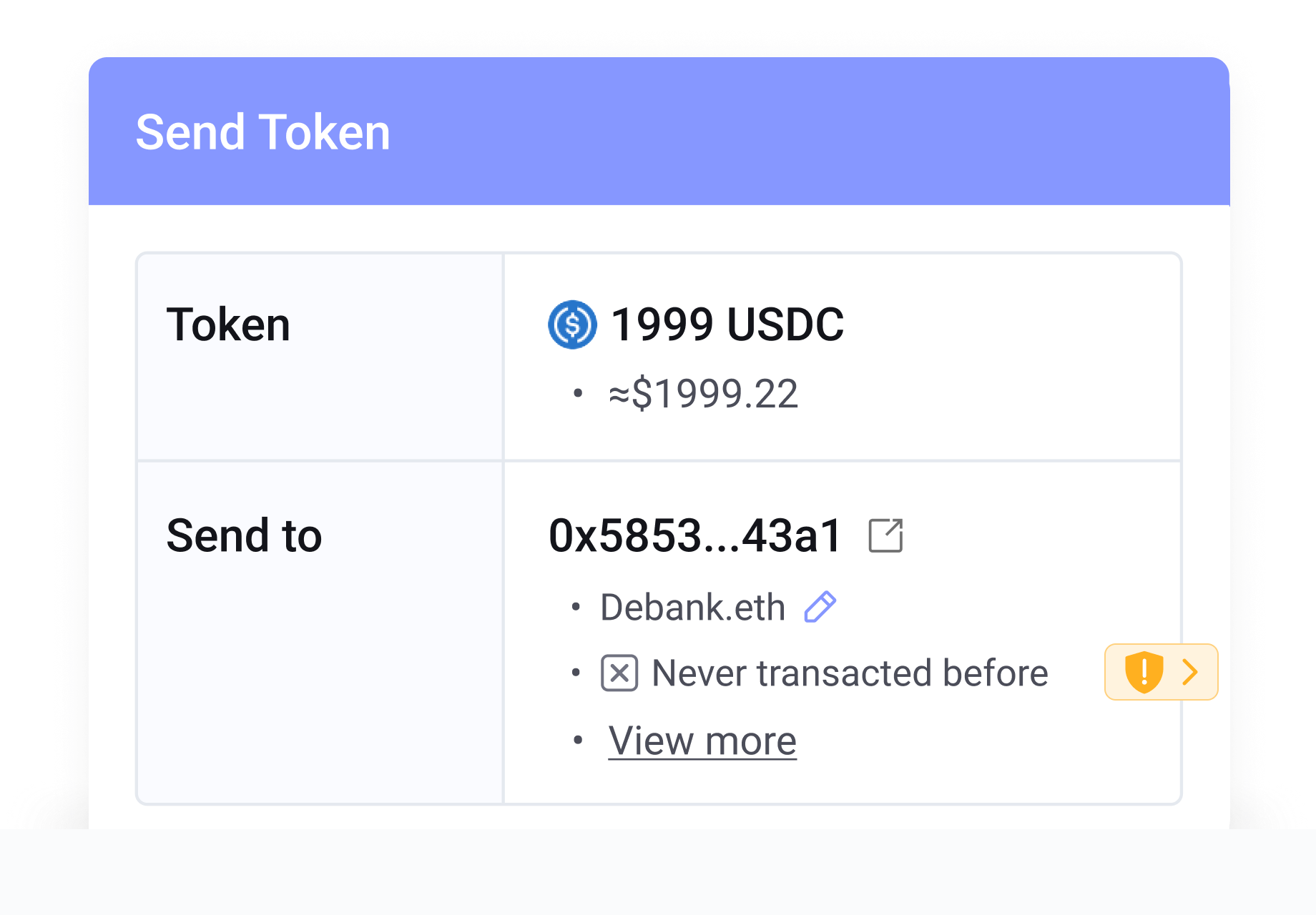
Here’s the thing. You can read a contract call 100 times and still approve something dumb. Simulation changes the game by giving you a rehearsal. Rabby simulates transactions client-side and surfaces what might go wrong—failed calls, excessive gas, or suspicious token approvals—before you hit confirm.
In practice that means fewer reverted txs and fewer surprise losses. My instinct said this would be mainly for rookies; turns out it’s invaluable for power users too. I caught a sandwich attack vector during a sandwich-susceptible swap because the sim flagged an unexpected slippage path.
Keep in mind simulation isn’t perfect. It relies on node state and assumptions about mempool behavior. So it’s a strong signal, not an oracle. Use it as a safety net, not as a guarantee.
Security posture and hardware wallet support
Rabby integrates with hardware wallets which is non-negotiable for high-value DeFi ops. Connect a Ledger or similar device and sign critical txs there. That’s how I operate for large positions.
Two more notes: first, always verify the transaction text on your hardware screen. Second, prefer separate browser profiles for testing vs. main operations—this reduces dangerous cross-extension leakage. I’m not 100% paranoid, but careful. You should be, too.
They do offer extra controls like token approval management and the ability to revoke allowances; use them. This part bugs me when people skip it—token approvals can be a major attack surface if left unchecked.
Power-user tips and workflows
Switching networks quickly: create a short list of your top 3 networks. Add network presets for gas and RPC endpoints you trust. This reduces RPC flakiness during critical ops.
Batch approvals sparingly. Yes, batch approvals feel convenient, but they’re riskier. Simulate them first. If you must bulk-approve, set tight allowances where possible.
Use a separate “execution” account for high-frequency trading and keep long-term holdings in cold storage or a hardware-secured account. I do this and it prevents messy cross-contamination when experimenting with new contracts or scripts.
Where Rabby still needs polish
No product is perfect. Some network integrations need updates for emerging rollups, and UI language on complex contract interactions can be clearer. Also, if you’re used to one-click cross-chain bridges deeply integrated with a single wallet, switching mental models takes time.
But the devs ship updates regularly and the roadmap shows attention to deeper simulations and better analytics. For now, it’s pragmatic: not flashy, but useful.
FAQ
Can Rabby handle all major chains and L2s?
It supports many of the big ones and popular L2s, but not every niche chain. Always verify the chain list in the extension and, if you rely on a new rollup, test small transactions first.
Is transaction simulation foolproof?
No. Simulation is a strong pre-check, but it depends on node state and assumptions about mempool ordering. Treat it as an important safety signal, not an absolute guarantee.
Should I use Rabby as my main wallet if I do high-volume DeFi?
Many power users do. Combine Rabby with hardware wallet signing, run sanity checks with simulation, and keep long-term assets offline. For high-frequency automated strategies, pair Rabby with dedicated execution accounts and clear monitoring.
